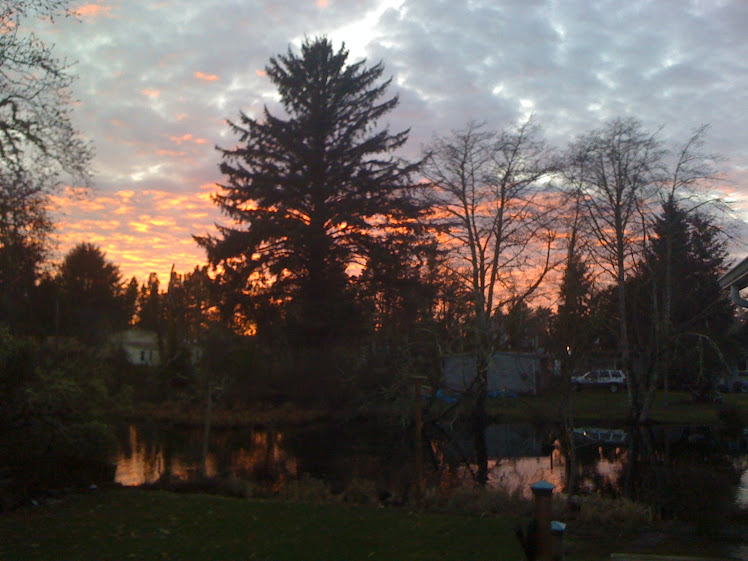
Winter Sunset, Loomis Outlet

Winter Sunset, Loomis Outlet

Saturday, February 22, 2014

An Unexpected and Welcome Visitor


   Most birders will say when asked, that their favorite bird is the last one seen.   That can be true, especially if you're on a trip seeing lots of new and unusual birds.  But I think my backyard crew is closest to my heart, and the wren family is closest to the top of the list.

During the recent heavy weather I scattered hulled sunflower seed on a stone bench near a window in order to see who came in for breakfast.  It's a perfect spot, situated near a big old alder tree where the birds can shelter.  A mixed flock would pour down from the alder into the shorter escallonia, take a look around, then move, one by one, to the potted maple and gingko trees that  overhang the stone bench.  Birds have to be cautious: you never know what bigger bird may have you in its sights for breakfast.

Visitors included the usual suspects: towhees, song sparrows, lots of juncoes, red-winged blackbirds.  Three Stellar's jays would sometimes noisily arrive like ill-mannered party guests and scatter everyone else.  Two flickers would occasionally  squat on the bench and peer curiously at the seed.  Because of the flat, hard surface of the stone and their longish bills, they would have to tilt their heads sideways to carefully glean a seed.

But then - an unexpected guest.  A Bewick's wren.  Short, finely striped tail tilted straight up, lovely light eyebrow  over a bright, bead eye.  His back brown as a nut, he was the picture of optimism on a windy and harsh day.  The wren preferred to glean seed where it had fallen into two big soil-filled pots next to the bench.  I was surprised because wrens are mainly insect eaters.  I can't recall seeing one at a feeder.  But times were hard, the wind was blowing, and many birds are opportunists.  

I used to live next door to a pair of Bewick's wrens who lived in the dense hedge in our side yard in Portland.  The male would sit atop the hedge and sing his lovely sparrow-like song and the female would poke her head out  to watch him, near their hidden nest.  Some of the best neighbors ever.  Later in the spring I would see their slightly scruffy brown-grey fledglings, but none ever came to one of my feeders that I know of.

By the way, this wren was 'discovered' by John James Audubon.  He named it after an English  friend who was a skilled wood engraver and bird lover.  The usual pronunciation is 'Buick' - like the car.

Now that the weather has softened at least for the moment, it's good to see the wren skulking in the dense shrubs near the house.  Later this spring, when I see little fluffs of new wrens lined up on a branch with a parent, I'll be happy  to think I made life a bit easier during the hard times.

Two Very Different Hummingbirds


It's 23 degrees at four o'clock this afternoon with a stiff east wind blowing.   Safe to say we're all freezing our tail feathers off.  What about those tiny, delicate looking hummingbirds we see zipping around our gardens?  Well  there are two very different hummingbirds that we may see. 

This time of year it's a safe bet that all the fair-weather-friend rufous hummingbirds are soaking up the sun along the Texas Gulf Coast or even farther away along the coast of Mexico.  They return in very early Spring and it's fun to read of their advance north on the on-line bird tracking  sites. In fact, a way too early rufous hummer has been spotted in northwestern Oregon this week.   Just in time for the deep freeze.  Sad to say, that little bird probably won't see summer, as they just aren't  cold weather survivors. 
The  cinnamon and green hummers you see in spring and summer are the rufous ones.  The males almost glow red in their mating finery. The throat, or gorget, is a dense fuchsia when it flashes in  the light.  

This time of year  we should be seeing only Anna's hummingbirds.  These little birds have greenish backs and what is called a "washed out grey" underbelly. I think it's kind of pretty: an oyster-shell grey.  But the great thing is that the males' heads are a full helmet of deep rose red, all the way down to the tops of the wings.  When the light catches that red, all the girl hummers swoon.  It is pretty remarkable.  And, they survive this kind of weather fairly routinely.

Anna's hummingbirds live year-round from southern B.C. to northern Mexico.  They stay on the west side of the Cascades for the most part, and  can be found on the lower mountain slopes as well as near the ocean. One way they  survive this killer weather by "going torpid" at night.  This means that they can lower their body temperature to almost the temperature of the surrounding air.  When that happens to a human, it's called death.  But hummers do this every cold night.  This causes their metabolism to run at about one-third its normal rate.  Because they need to continually stoke their super-fast metabolism, they would risk starvation trying to maintain it during especially cold times. 

On a cold night an Anna's will find shelter out of the wind, deep within a dense shrub or tree. I saw an Anna's one cold morning with a little cap of snow on his head.  I thought  for sure he was a goner.  But as the sun began to minimally warm the garden, he slowly opened his eyes, then shook his head till the snow was gone. He fluffed his feathers and zip, off he went in search of breakfast.

If you feed hummers during the winter they will love you if you switch out the icy feeder solution for gently warmed sugar water each morning.  But they will survive (or not) regardless of sugar water feeders.  They find lots of insects wintering in tree bark or just flying about.  The big danger comes with a silver thaw, when ice coats the branches and food  is locked in the deep freeze.

This winter I have two Anna's vying for space at the feeder.  They wait in the holly tree each morning, noisily challenging each other and then buzzing me in an effort to get me moving faster.  I look forward to seeing the slightly scruffy grey babies that they will bring to the feeder some warm March morning, when this weather is just a distant memory. 

Friday, January 31, 2014

New Bird Species Found in 2013


In a world where walking on the moon and instant messaging are taken for granted, it's surprising that new species are still being found in remote places in the world.   But that's exactly what happens every year.   This past year, at least five outstanding new bird species were discovered.    Just to give you a flavor for how very exotic these birds are, I'll name them.  There is the Cambodian Tailorbird, the Guerrero Brush Finch, the Junin Tapaculo (emphasis on the third syllable), the Rinjani Scops Owl and the Sierra Madre Ground Warbler.  Wow. 

There are still animals, plants and birds out there to be discovered.  We have been responsible for the extinction of several species: passenger pigeon and dodo come to mind, and yet still there are more to be found.   This, for me is the essence of hope. 

Of course, they all live in incredibly remote jungles.

 The Cambodian Tailorbird was undoubtedly seen or heard by some of our troops fighting long ago in Viet Nam.  This bird lives in humid lowland scrub in Phnom Penh and other sites in that floodplain area. Humid lowland scrub means temperatures close to 100 and humidity to match.  You have to be very committed to hunt down an elusive small bird in these conditions. 

The Guerrero Brush Finch lives south of us in Mexico, in the misty cloud forests of the southern Sierra Madre range in the state of Guerrero.  It has a lovely chestnut crown and black mask.  If this bird lived in the U.S, it would fall into the sparrow family.

The Junin Tapaculo is found in the Andes in Peru.  Scientists differentiate it from other very similar birds only by the notes of its song.  Its scientific name  is Scytalopus gettyae.  As often occurs, the bird was named in honor of a scientist whose hard work has merited attention and distinction.  Mary Getty is a nature conservationist and works for the National Fish and Wildlife Foundation.

The Sierra Madre Ground-Warbler is a unique little bird.  It is in a  family of ground-walking songbirds and it appears that they can barely fly.  They live in dense forest understory and feed on bugs.  They are also skilled ventriloquists~  you can never figure out where they are from their call, and they always sound far away, even if they're within a few feet. 

Lastly, the Rinjani Scops Owl is found only on one island in a series of islands in Indonesia.  Locally these dapper little owls are called burung pok, which sounds like their call.  This is the only bird native to this island.

I hope that by telling a bit about each of these birds I've made them more real.  They are all listed as endangered already.  Maybe we can learn to preserve these exotic little creatures so that future generations can travel to wonderful remote places and actually see them thrive.  

Saturday, January 18, 2014

First Bird of the New Year

It was early New Year's Day morning in Guadalajara and all was quiet, finally.   Tradition calls for families to gather for all night street parties in this busy city.  Cooking starts on grills in the late afternoon of New Year's Eve as people gather with more food, music, kids and dogs.  A great time is had by all, and the best thing for visitors to do is simply enjoy the spectacle.

When peaceful morning arrived, I opened the door to the beautiful walled garden outside our room to see what birds had ventured out early, like me.

Many of us have special ways of kicking off the new year.  Resolutions, plans and wishes seem more doable with a clean slate ahead.  A tradition for many birders is to make a point of noting the first bird seen on New Year's Day.   This can be a relatively predictable  ritual if you're at home - robins, sparrows -  and an adventure if you're not.

 As I walked out into the bursting greenery, two little Inca Doves scuttled to safety through the low-growing azaleas near the fountain.  Great first bird!

Inca Doves are small tropical doves, about the size of a robin.  They are dainty, graphite-colored little birds easily found in tropical America.  A closer look reveals that each feather is softly outlined in a darker grey, giving the dove a delicate, scalloped look.  And when they fly, lovely red underwings flash in the light.

The thing about the first bird of the year is that it can help you set the tone for the coming year.  Doves are seen around the world as a symbol of peace, but they carry even deeper meanings.  Doves represent harmony and hope by being a uniting force.   Think of the soft call- cooing - of doves.  It's a calming and soothing sound.  Doves form large flocks and are comfortable living among people  all around the world.  Every  park and plaza in Mexican towns and cities has its dove contingent, industriously dot-dotting along, avoiding kids and dogs and finding good things to peck up in the grass.

So, more harmony, optimism and tolerance - some good goals for the new year.

Being at home could mean that that first bird sighted might turn out to be (heaven forbid) a starling.  Well, don't despair- take a deeper look.  Starlings are survivors.  They are bossy, fearless and strong, and will chase away predators.   Not bad attributes to have on tap.

As the new year begins to gain momentum, take a minute to consider all of those we share this earth with.  The birds and other critters have a lot to offer us, if we are willing to slow down and look a little deeper.


Tuesday, December 17, 2013

Sharing the Road with Red-Tailed Hawks on the Hunt


I’ve had to make more than the usual number of trips to Portland lately,  and I've noticed a large number of red-tailed hawks hunting the margins of the road.  Some of these raptors are residents, and some are moving through, heading farther south for the winter.  Red-tailed hawks  are very variable in coloration, running from tan to almost black.  Most commonly though, they are a rich brown and from the front, you will see a thickish dark 'necklace' on lighter breast to belly feathers.  And of course, a brick-red tail on adults.

Highway 26 has become incredibly busy as development  moves from  Beaverton, Hillsboro, North Plains and on westward.  I always watch for  the red-tailed hawks that are commonly found sitting hunkered on the big overhanging light supports along the road.  They like to hunt the wide flat fields, so start looking once the road leaves the mountains and flattens out. The birds may even clutch the power line in massive claws, teetering back and forth - not a very fierce and dignified hawk posture.  But these are excellent lookouts  for  meals.  The grassy median and the roadsides are a great place for mice and voles.  The hawks can see the slightest movement below them, even with all the wind movement from the traffic. They launch downward with great concentration and speed to grasp their prey with strong talons.  If you see this happening, watch for the next thing - keeping one eye on the road, of course.  Once the prey is secured, the hawk will spread her wings out and forward on either side of the unlucky catch.  This is called 'mantling' and from the fierce look-around by the hawk that accompanies this action, I'd say it's a serious warning for other predators to back off.

It's getting trickier for raptors to navigate Highway 26 these days.  There are more lanes, faster traffic, bigger trucks.  The hawk has to time her swoop for a meal so that she isn't falling directly into the path of a car traveling at 60-plus mph.  Sadly, some don't time it so well, but  I see very few road-killed hawks along 26.   I credit their sublime ability to move in the air, to gauge distance and speed.   More often, they're seen pulling off tasty bits of lunch as traffic roars by in both directions.

Hawks will feed just feet from the road and traffic.  I'm sure if you stopped to get out, that bird would fly with its prey, but they must not see the flow of traffic as a threat.    A female hawk will fly up and away with her captured meal to take to her nest to feed young.   This is fun to watch when a big long snake is the prey and the hawk flies, snake twisting and dangling,  over a convertible.

When you drive 26 or other roads,  be on the lookout in the distance and you may be able to enjoy seeing wild nature at work during rush hour.

Monday, December 16, 2013

It's Time to Watch for Snowies


As I looked out our windows the past few days, I wouldn't have been a bit surprised to see a snowy owl perched on a snag, gazing out with yellow cat eyes over the snowy expanse of our side yard.  This is snowy owl weather, and reports are beginning to come in that these owls from the far north are starting to drop down into 'warmer' territory.  It may be because of the pressure of too many owls (a good thing in a way) that pushes owls down to us.  It may be harsher than usual weather up north.  There are lots of theories but the important thing is to enjoy them while they're with us.

Snowies prefer open, grassy fields where they  hunt mice.  A snowy will appear as a short, squat, white shape on the edge of an open field, usually perched low.   Young birds will be mottled brownish, but still mainly white. Adults are the purist white imaginable.  They hunt by sitting motionless for hours, watching for movement in the field.  When a hapless field mouse or other prey is spotted,  in utter silence the owl will swoop out and down, taking the catch in powerful talons.

I watched a snowy owl who had been perched for some time on a low snag, motionless except for the slow blink of amber eyes.  A flock of red-necked phalaropes, small shorebirds who also winter with us, gradually drew closer and closer to the still hunter.  Finally the flock, still busily feeding, was no more than twenty feet from where the owl sat.   When he made his move, his lift-off was effortless.  Huge white wings unfolded and long feathered legs pushed him from the snag.  He angled over the now-panicked flock, talons extended, and easily grabbed an unlucky shorebird.  Almost casually he arced back to the snag, where feathers blew away in the icy breeze as he ate his catch.

Snowy owls showed up in Ocean Park last year.  One bird spent the night on the eaves of a friend's house right in town.  One snowy was seen at the Ocean Park approach to the beach.  He was quietly perched near the dunes in plain sight, but few of the people on the beach seemed to notice him.  Nature is all around us, but we often do not see the unexpected.  That's one of the lures of nature for me: to have the gift of such wildness so near us.

On another front,  it's been a busy few days feeding and watering the local bird crew.  Even the lake outlet is frozen over, so the small birds need water as well as food.   Little black-hooded juncoes, chickadees, towhees and even a few red-winged blackbirds have appeared on the deck, looking for a handout.  Shelled sunflower seed is quite popular, and a shallow plastic bowl of warm water is much appreciated.  These birds survive - or don't - without us.  Some will fall prey to the cold and stress, especially birds that were hatched this year.  They don't have all the survival skills lined up yet.  I found a beautiful female orange and brown varied thrush this morning.  She was actually still warm, but had sadly succumbed to the cold.
If throwing a handful of seed outside a few times a day can save one or two young birds, I'm all for it.  And the payback is to see them skittering along on the slippery ice,  fluffy and optimistic in the wintry sun.


Friday, November 22, 2013

Eight Reasons to Love Birds


It’s the special time of the year to be thankful.  If you read my column at all you’ll know that I have a deep love of birds.   I’ve been asked many times why that is, and oddly,  it’s hard to explain.   It’s one of those things:  if you love something, no explanation is needed; if you don’t, none will suffice.

Here are eight reasons the quickly come to mind that partially explain that love.  National Audubon recently did a “Ten Reasons to Love Birds”, but they included ideas like “money makers”, which I guess is true, but really doesn’t fit for me.   Maybe you can think of other reasons than these.  I can, but there has to be a limit, after all!

1.    Birds are optimists.   On the rainiest, darkest morning of winter I can find a noisy, busy gathering of chickadees, nuthatches, juncos and towhees around the feeders.  They’re fluffed out and waterproof, exchanging info about the night just past, easily shaking sparkles of rain from their tiny backs.  Not a sign of a down mood anywhere.
2.    Birds are dependable.   Spring migration brings winter birds back to us to sing, forage and nest.   Like the swallows of San Capistrano, many follow a schedule that will bring them back  within the same week every year.   Following the approach of Rufuous Hummingbirds on the on-line bird sites is like waiting for Santa.   First spotted on the California border, then the Willamette Valley, then around Astoria then wow- there’s a bright Rufous male at my feeder.
3.    Birds are great vocalizers.   The soft murmuring that arises from the mallard flock when I appear with the corn can in the morning is a lovely sound to start the day.  I wonder what they’re saying about me?  The absolutely mystical sound of a Swainson’s Thrush song echoing through the summer woods is thrilling.  He sings  ‘cordelia’ over and over on a rising note.   Lovely.
4.    Birds will boost your mood.  Red-breasted nuthatches hanging upside down on a pine trunk making their toy horn call brings a grin every time.  An assertive female mallard chasing off an over-attentive male, her head down and eyes narrowed is just comical.
5.    Birds are good parents.   Watch a mother woodpecker try to teach her youngster to eat from a suet feeder, patiently repeating the same action over and over.  Or a mother mallard with a brood of ten, she so carefully watches over them, counting them repeatedly and immediately herding them to safety at the first whiff of danger.
6.    Birds are the clean-up crew.   Who else is going to eat road kill?   Those young crows who wait to the very last minute to get out of the way of your car deserve a brake.   That’s dinner they’re peeling off the road, and the clean-up part is a bonus for us.
7.    Birds are efficient.   There are ducks designed to utilize food in every depth of water.  Dipping ducks, like mallards, forage on material in shallow water where they can tip up and eat away.  Other species of ducks dive somewhat deeper for the next layer, and others to even deeper.  Nothing goes to waste.  Spilled seed at the feeder disappears fast.  Skulking fox sparrows, towhees and juncos dash out from the protection of the heather and rhododendrons to score every seed.
8.    And finally, birds just are.   From what we call drab brown little sparrows to tropical resplendent quetzals, their beauty is awesome, in the truest sense of the word.  They  make their livings near us, giving us joy by letting us see them raising their families, nesting, singing, hunting and finally dying, to become once again, part of our great earth.

What’s not to love?

Saturday, October 26, 2013

The Autumn Bird Crew


This mild Indian summer weather has been a gift.  Gold, red and orange leaves still flicker in the trees.   In the morning, deep mushroomy smells come from the woods and afternoons bring a rich, blackberry perfume. 
Even the moody clouds have provided an unusual Fall for us – no rain so far.

 The duck crew still loafs in the water off the yard each morning, waiting for the human to come out and toss corn.  As soon as I round the house where they can see me, a soft muttering conversation begins among them and then one by one, they burst from the water and land in the lower yard.  Some are so wild that the moment they land they take off again, rethinking their brash move.  Eventually they all arrive and dig in.

 I’ve begun to toss a handful of shelled sunflower seed onto our stone patio.   Juncos, hooded like tiny monks, towhees and two bossy Steller’s jays take turns with a very industrious Townsend’s chipmunk.   The chipmunk races over the stones, belly almost on the ground, Hoovering seed as fast as he can.  His cheek pouches look about to burst.   He’ll have an easy winter,  I think.  By the way, if you get a chance to look closely at a Steller’s jay, note the wonderful vertical blue eyebrows on the black face.  Quite stylish. 

The pugnacious Anna’s hummingbirds have relaxed a little since their competitors, the Rufous hummers, have headed south.  The male Anna’s sits on the feeder perch surveying his domain.  If he had a little comment bubble above his head it would say “Mine….all mine.” 

And the Peregrine falcons are back.  Look for sleek, dark hunters with a characteristic helmet band on the face.   We came upon one on the beach  who had just  taken down a crow and was beginning  his feast, hungrily pulling feathers away from skin.  He had neatly removed the crow’s head, which lay nearby.  He won’t leave very much behind, and whatever is left will be eaten by others: insects, other carrion eaters such as ravens, even other crows.  It’s the clean up crew and that‘s a good thing.

I’m taking in the seed feeder every night since the neighborhood bear managed to climb our holly tree, inch out on a branch that was too small and bring the entire thing down, bear and seed feeder included.  He then proceeded to bend the metal feeder into an S shape.  It was high enough that we needed a ladder to refill it.  Now it comes in at night.   When I carry it out in the early morning, chickadees sound their two-note alarm call and retreat farther into the shore pine.  I hang the feeder and as soon as I move away, the family of chestnut-backed chickadees and two red breasted nuthatches head for breakfast.  Nuthatches hunt insects on tree bark head-down, going from high to low, using their sharp bill to pry for food.  When they fly to the tube feeder, they land head-down on the mesh, take one seed and fly away.  Chickadees also take one seed and fly to another branch where they delicately hold the seed between their tiny feet while they eat it.

So even though it’s Fall and things seem quieter, there’s always something going on in the yard.   Just now the varied thrush, looking like an orange-black meadowlark, is skulking just at the edge of the heather.  His low, haunting whistle echoes through the shadowy woods.

It's that wonderful, turning-in time of year when there is a soft mist over the water, all the reeds turn golden and the winter birds are returning.  Those harvest moons, huge and pale gold, are sailing west over the ocean.  Magical.  There is something quite reassuring about the predictable, lovely changes of the seasons.  Life will throw us curve balls, but for me,  if the varied thrush returns and sings deep in the woods, all will be well.

Friday, October 11, 2013

Some Thoughts on the Federal Duck Stamp Program


On misty fall mornings in marshes and lakes across the country, the voices of geese and ducks can be heard calling and echoing as they pass above in ragged vees or from flocks gathered on still, mirrored water.   It’s a Norman Rockwell picture of autumn in America. 

There was a time when these ponds and ducks and geese were in real danger of disappearing.  Their numbers had become dangerously low and the potholes were being filled in to provide more arable land.   This was during the Great Depression and people were killing wildfowl and other animals simply to feed their families.  It was a hardscrabble time. 

Wildfowl conservation seemed like a frivolous thing to talk about in those dark days, but out of those days came the  Federal Duck Stamp Program.   The Duck Stamp Program was nicknamed the “little program that could”, and since its inception in 1934, has generated more than $750 million dollars.  Ninety-eight cents of each of those dollars has been used to help purchase or lease 5.3 million acres of waterfowl habitat in the U. S., much of which is now protected within the National Wildlife Refuge System.

So, what is a duck stamp and where do they come from?  The Program was started by President Roosevelt, and to this day, all hunters must buy a duck stamp every year in order to hunt wildfowl.  In order to make it interesting, the Federal Government provides a juried art event to choose the stamp every year, and it’s a very prestigious win for wildlife artists.  This year there were over 200 entries.  The artists are given a limited choice of wildfowl types to paint.  This year’s winner shows a male and female canvasback.   There is also a Junior Duck Stamp Contest and you see some of the incredible entries now at the Ocean Park Library.

Ducks Unlimited, a hunters’ organization, has been instrumental in supporting the Program. But, you say, hunters kill ducks, right?   Yes, but.   Here is a comparison of ways birds are lost.   
 Annual waterfowl hunts account for 15 million bird kills a year.
 Window crashes, cat kills, high tension wires, cars and communication towers account for over five times that many kills a year!  These stats were compiled by David Allen Sibley in 2003.  Sibley is a birder and conservationist.

Plus, when a piece of land is set aside by the Duck Stamp Program, not only the wildfowl are protected.  Frogs, newts, shorebirds, coyotes, bats, whatever other critters use that area are also protected from habitat loss.  

Hunter numbers across the U. S. are dwindling, and the environmental community has been slow to recognize the value of the Duck Stamp Program.   Birders don’t have to buy a stamp to go out in the field, and some argue that birding is ‘non-extractive’.   We don’t take home a brace of birds, but there is our vehicle impact, trail maintenance and so on.  

I say, buy a stamp if you care about the birds.  If you shoot them or watch them, we’re all in this together.  If we care about habitat and wildlife, the stamp is a good thing.  And a current stamp will get you free admission to any wildlife refuge open to the public.  (When they re-open, that is.)

You can purchase this small piece of art at your local post office, local refuge or online.  There is an excellent small book  about the Duck Stamp Program called  “The Wild Duck Chase”  by Martin J. Smith.  Our library system has it.

So the next time to look up to admire a noisy flock of geese or ducks, know that you can help to support them.

Saturday, September 28, 2013

Stormy Autumn Days


I’m writing this on Saturday afternoon and the Peninsula is getting hosed.  We got the bird feeders in just in time~ the seed gets soaked and the feeders usually end up in the ditch across the road in a storm like this.   I wonder where the birds hunker down during a washout like this.   What I read is that land birds get as close to a tree trunk as possible, on the lee side and just wait it out.  Small birds like chickadees will group together for warmth. Water birds find the protected side of the lake or river, face into the wind, and ride the waves.  Healthy birds are waterproof, so by facing into the wind, they keep the water out of their feathers.  Unlike horses and cattle who you usually see tail-ends to the storm.  Not waterproof either way, I guess.

This is an early storm and it’s hitting during the peak of Fall migration.  Not a good thing.   The high, wet winds will be a hindrance to southerly flight and cause birds to use up much more energy than on a dry, windless journey.  They have been stoking up on seed and insects just for this trip, and hopefully will have adequate food stores to get where they need to.  The flocks will make stops along the way to refuel, once they’ve left the storm behind.   A kind request:  if you run your dog on the beach and see a big flock of sandpipers this time of year, they’re doing the refueling thing.  If they are chased off their feeding ground, it causes them to waste valuable energy.  Let your pooch chase a stick this time around and give the birds a break.

Birds are definitely on the move south.  The little cinnamon-green hummers - Rufous, by name, are now few and far between at our feeders.  I have a feeder just outside my office window where the cat and I can watch these little guys duke it out with the pugnacious Anna’s hummers.   Only the Anna’s  are here now, and they will stay the winter.   Our Anna’s perches in the ell of the house, on the lee side out of the rain by the chimney and makes forays to the nearest feeder.  These are greener feathered hummers, and the males'  gorgets, or throat plates, are a vivid maroon when they catch the light.  Stunning. 

As I type, an immature Anna's just briefly checked out the feeder.  His, or her, color is still undefined, lots of gray mixed in with white and brown/green.   So tiny, and their feet- delicate perfect black toes, almost hairlike.  I love the way most birds neatly tuck feet and legs back when flying, then extend them just perfectly when landing.  A small thing, but a gift to observe, I think. 

As the days shorten and the rains continue, I'll watch for the Anna's at the feeder.    I'll look forward to their buzzing-around-my-head demands when I go out in the cold to refresh their feeder.   Even if it's raining, there are wild things to bring joy.

Sunday, September 15, 2013

A Grebe Experience


When you see Western Grebes floating serenely in the bays and inlets near us, it’s easy to think, “wow, what a regal and peaceful looking bird.  So beautiful...”   And they are, most of the time.   When captive and in a strange place, not so much!

Western Grebes are stately  black and white water birds that winter along our coast and in protected bays.  You may have seen a photo of their mating dance, where two grebes ‘run’ across the water, side by side.   Looks impossible but they do it.

A very bad winter storm at sea a few years ago brought a bumper crop of Western Grebes to the Wildlife Center.  For some reason, these particular birds were heavily impacted.   When they washed onto our shores, they were wet to the bone, hypothermic, weak and hungry.  And really challenging to capture. 

 Western Grebes have  long, snake-like necks, a small head and a thin, very sharp beak.   In order to protect themselves, they strike out with this beak at whatever – read whoever – is  perceived as a threat.  They are quick and accurate too.   Add to this  that the usually sleek black feathers on the top of their heads stand straight up when they’re antagonized, that their eyes are fiery red and that they can screech like banshees.  Not a bird for a novice bird rehabber to handle!   They’re just trying to protect themselves, and it’s a pretty effective effort.

This storm brought us probably over seventy Western Grebes within a 2-3 day period.  They were everywhere at the Center: in boxes, in wire pens, in big dog crates, anywhere they would fit.   Luckily they’re pretty sociable birds, so more than one could go into a container.  But looking down into a pen full of Grebes was like looking at a bunch of screeching cobras.   You just had to pick one out visually and gently but firmly hold it by the neck near the head – just to immobilize that bill.   Then get your other hand around the bird and lift quickly, keeping it’s rear away from you, as a big squirt was usually the next thing that happened.

We washed, dried and fed nothing but Grebes for days on end.  We waterproofed till we ran out of dish soap.  Hairdryers running on wet birds blended with the unearthly screeching- ear plugs were a must. 

Keeping that much fish thawed was a challenge too.  The Center has freezers full of frozen fish of all kinds, since every sea bird likes a different kind of fish.  And,  some like it diced up, some cut in half, some whole.   This is a sophisticated bird restaurant.   So boxes of the right fish were thawed, cut and placed in communal feeding pans.   Once the Grebes were healthy they made short work of the fish on offer.   A daily swim was in order for each bird, so they were carried  one by one by gloved volunteers to the bathing area and placed with other Grebes for a nice bath.   More screeching, but happier now:  water is their element.

Once the birds were healthy and waterproof,  on a calm day off they would go for release in  the Bay.  Volunteers love this part.  Sassy birds dash for freedom, fluff, dive and resurface, then do it all again.  Pure joy and the same for us, as we helped this happen.

Sunday, August 18, 2013

Baby Birds Lessons


The yard is full of  baby bird song now.  Well, it’s actually not song, but begging calls.   You’ve probably seen the young crows  following right behind a parent, squatting and fluffing like a helpless nestling and making a whiny, kid sound.  That’s the only way I can describe it.  “C’mon Mom, feed me, I’m dying here.”   The patient parent pokes some nutritious bug or seed into the gaping mouth, probably hoping for some quiet.

The flock of twenty or so young red-winged blackbirds are feeling their oats, flying and singing across the yard, pretty heedless of any danger.   Yesterday I heard a loud clunk, the sound I’ve come to know means bird-window collision.  Sure enough, below my big window (which is well-marked for bird safety by the way) lay a stunned young red-wing.   Wings and tail open and flush with the ground, head extended and eyes open.  Didn’t look good.  I gently picked him up and met no resistance.  Really stunned, maybe too hurt to make it. But there was tone in his neck- his head didn’t flop down, and both legs quickly pulled back when I touched his feet.
I put him into a dark, well-ventilated box in a quiet corner of the garage and hoped for the best.  When I checked in a half an hour, he was hopping ready to get out of there and back to his pals.  He flew straight and true for the feeder for a catch-up snack. He was lucky.  Window collisions kill millions of birds a year.   It’s easy to prevent too.   I like to hang a long string of colored glass beads in each window.  It gives birds perspective and they then ‘see’ the glass.   Most of them anyway.  Youngsters are a different deal.  You have to be looking where you’re going for it to work.   Kids.

The osprey parents have a new fledgling, and both parents and youngster cheep noisily as they circle the lake.  Such a fierce, majestic bird, and they cheep like a songbird.   The youngster’s new wings haven’t developed all the muscles he will need for migration and he needs flight time.   But again, like most adolescents, he wants to hang out  -- in the nearest tree, watching the parents work for a living.   He perched happily this morning and one of the adults came flying in from behind and bumped him right off the branch.  Fly, baby. 

Hairy woodpeckers live in our area, but they’re heard much more often than seen.  They have a high, descending kind of laughing call, called a ‘whinny’.  The hairy woodpecker couple have a fledgling too, and one parent brings him to our suet feeder early mornings.  Hairys have a beautiful red cap on their head,  complimenting a black and white body.  The youngster hasn’t feathered in with adult feathers and is sort of a graphite gray.   He had a lesson in getting suet from a feeder.  Parent would reach in and peck off a succulent bit, then turn and face the baby, who clearly thought it was his.  But no, parent ate it, looking pointedly at the baby then the suet.   Baby wasn’t happy.  All this time parent had willingly fed him, what’s the deal?  After many, many tries, the youngster reluctantly went for his own suet.   I can imagine a bubble over the parent’s head saying something like “Finally!”

And of course, all of the ducks have grown into beautiful, fully-feathered adults.  The three light colored ducks are still just that: mallard-ish, but with a pale tan undertone instead of brown.  They’re beautiful and I hope to see them back next year.  They’ll be easy to identify.

So life carries on.  This was a good year for the birds,  with many successful broods.  There are so many more I haven’t mentioned. The golden clouds of goldfinches sailing from holly tree to shore pine, singing, singing.  The new spotted towhee learning to hop and feed.   Life is good.   


Sunday, August 4, 2013

How to Wash a Dirty Bird


It was the morning after a dark and stormy night.  At the Wildlife Center, a new, bedraggled duck had been brought in for care.  This was a surf scoter, more commonly known as a sea duck.  These are big, burly, heavily feathered ducks that thrive in the open sea, effortlessly riding the huge swells.   They breed and nest on the far northern tundra and winter in our bays. 
They sport a bright orange and white bill that seems to start at the top of the bird’s head, black body and white eye.   Lovely orange feet complete the ensemble.

This guy was found in the Hammond boat basin. He was wet to the skin – never a good thing for a water bird – thin and weak.  It still took some skilled acrobatics from a sea kayak to nab him in a net.

He now sat in a warm, well-ventilated cardboard box, towel wrapped around him.  He looked kind of like an exhausted boxer after a tough bout.  Often we have no idea how a bird becomes ill and compromised- they are simply rescued and brought to the Center.   This one got into some chemicals somewhere in the water that caused his feathers to lose their waterproofing.  That’s all it takes.  Icy water getting through to skin causes hypothermia, which inhibits feeding which leads to weakness and death, unless a rescue happens.

So, how to clean a sea bird.
Gather two plastic pans- think shallow kitty litter boxes.  Fill them both with hot water and add LOTS of Dawn liquid dish soap to one.   The label tells the truth: it’s the best thing to use for de-oiling birds.   Put enough liquid soap in to make the water ‘slimy’ to your fingers.  Find at least one more person to help.  Gently but firmly place the duck in the first pan and  hold him as still as possible.  The helper  then scrub, scrub, scrubs.  Fingers massage feathers down to skin everywhere on the bird.  You can imagine that the duck, at this point, thinks his life is over.  We work as quickly as possible, but we’re not done yet.  Wash and scrub more.   Put the bird gently into the water-only pan and rinse with a strong stream of warm water, getting into all the hidden spots, like way under the wings and tail.  Run the water against the feather grain until the feathers feel squeaky clean.  Then…..do it all again – rinse and fill the first pan with more hot water and Dawn and start over.  More dirt and oil will appear like magic.  Birds can hold a lot of contaminants in their feathers.  Another rinse and you have an exhausted but clean bird.

Gently but quickly dry him with warm towels and place him gently in an enclosure that is dim and quiet.  If the bird is shivering, a hair dryer on low speed can be aimed into the enclosure.   We check on the washed birds but try not to disturb them until they are able to regain their equilibrium.   These are sturdy guys and unless there’s underlying illness or trauma, they’ll be ready for a nice fish dinner in a few hours.   This washing process doesn’t waterproof the bird. The bird does that.  Not just ducks either.  Each feather needs to be ‘zipped’ closed  by careful preening, and oil from an oil gland on the bird’s backside is used as a final finish.  But the feathers must be clean in order for this to be possible.

Our scoter did well and was soon doing his ‘threat’ posturing when we opened his door.  This consists of a lowered, extended head, weaving back and forth and an open bill.   Not too scary but hey, it’s all he’s got, and we like spunk in our birds.

A week or so later we watched with big smiles as he was released into Young’s Bay.  He fluffed his now clean and waterproofed feathers and immediately dove down long and far.  We wished him well and went back to the Center to wash down another bird or two. 

Monday, July 8, 2013

Final Leg of our Nayarit Birding Tour

El Camino Real is an ancient stone road that is still used by local people.  At La Bajada, the road climbs from the town of Las Palmas through the forest to a pass in the Sierra Madre. The road itself is about six feet across and is made of smooth rounded rocks that are about 2-3 inches round.  The local people who were working in the shade grown coffee plantation passed by us quietly, either climbing higher or walking down to the village below.  Old men led gray-white burros  on frayed ropes, laden with water and supplies.  Men and women picked the ripe coffee berries, placing them in baskets as children played among the trees.

  Birding a portion of the forest that pushes in on either side of the road was very productive.   Birds are abundant in the canopy around and above the coffee trees in the shade plantation.  The coffee trees thrive under the canopy and the birds thrive in the trees. It all works, as you know if you've tasted excellent Mexican shade grown coffee.   We located red-billed pigeon; two very territorial Colima pygmy-owls, another Mexican endemic; more good looks at the Berylline hummingbird; elegant trogons, ivory-billed woodcreeper (not woodpecker sadly),  San Blas jay; blue mockingbird; hooded oriole and many, many more.

 As we drove the rutted village road out to the main road, we passed huge open warehouses where the harvested bananas were brought, waiting for pickup. The roadside stands run by local women selling 'pan de platano', banana bread, were open and the aroma of the baking bread was quite wonderful. 

On our last full day of birding we learned that it's not necessary to leave the city limits of San Blas to find excellent birds.  A densely wooded section of road running through the suburbs to the beach yielded a ferruginous pygmy-owl; merlin; gila and lineated woodpeckers; plumbeous vireo and most surprising of all, an orange-billed nightingale-thrush, head back and singing lustily.   This was a first sighting for this location.

The days passed quickly in San Blas, each filled with unforgettable beauty: the birds, the dense forest, the river and its tributaries, the friendly people.  I'll return to San Blas to savor its richness again and again.

Sunday, June 23, 2013

Las Mirismas Lake

Another early morning found us back in the boats, preparing to travel the Upper Rio San Cristobal.  Our journey would take us to Las Mirismas, a huge, shallow lake favored by both black-belled and fulvous whistling-ducks.  As we started out from the dock in town, mist rose off the water and we pulled on extra sweaters.   Local men stood around, quietly eating breakfasts purchased from the food cart that appeared at the dock every very early morning.  Delicious smells of fresh tortillas and unknown spices wafted over to us.   The sky was a pure, clear pink with the promise of another hot day, but just then it was downright chilly. 
We drifted  quietly along the mangroves that form dense walls on each side of the river.  Tiny, brilliant mangrove warblers (a subspecies of yellow warbler, also seen) responded to a whistled owl call courtesy of our guide.  They  hopped animatedly in circles, bright rust heads and yellow breasts flashing in the early sun.  A mangrove cuckoo prowled and hopped up the branches; crane hawks and Harris’s hawks perched in high snags, watching for breakfast in the still water below. 

At Las Mirismas, purple gallinules stepped daintily in the muck caused by cattle grazing down the shoreline.  Rafts of both black-bellied and fulvous whistling-ducks darkened the lake’s horizon.  The black-bellied variety have charming hot pink legs and feet.  Barn swallows hunted around us, sometimes coming within inches of us in order to snag a particularly succulent bug.

By the time we left the lake it was hot, still and buggy.  Heat brings out the crocodiles and we were on the watch.  On the run back downriver, we spotted a sunning croc that was at least 12 feet long.  It showed us a very impressive row of uneven, pointed teeth as we sped by.

Again, back to shade, a shower and a cold beer on the patio to recount our morning’s adventures.