El Camino Real is an ancient stone road that is still used by local people. At La Bajada, the road climbs from the town of Las Palmas through the forest to a pass in the Sierra Madre. The road itself is about six feet across and is made of smooth rounded rocks that are about 2-3 inches round. The local people who were working in the shade grown coffee plantation passed by us quietly, either climbing higher or walking down to the village below. Old men led gray-white burros on frayed ropes, laden with water and supplies. Men and women picked the ripe coffee berries, placing them in baskets as children played among the trees.
Birding a portion of the forest that pushes in on either side of the road was very productive. Birds are abundant in the canopy around and above the coffee trees in the shade plantation. The coffee trees thrive under the canopy and the birds thrive in the trees. It all works, as you know if you've tasted excellent Mexican shade grown coffee. We located red-billed pigeon; two very territorial Colima pygmy-owls, another Mexican endemic; more good looks at the Berylline hummingbird; elegant trogons, ivory-billed woodcreeper (not woodpecker sadly), San Blas jay; blue mockingbird; hooded oriole and many, many more.
As we drove the rutted village road out to the main road, we passed huge open warehouses where the harvested bananas were brought, waiting for pickup. The roadside stands run by local women selling 'pan de platano', banana bread, were open and the aroma of the baking bread was quite wonderful.
On our last full day of birding we learned that it's not necessary to leave the city limits of San Blas to find excellent birds. A densely wooded section of road running through the suburbs to the beach yielded a ferruginous pygmy-owl; merlin; gila and lineated woodpeckers; plumbeous vireo and most surprising of all, an orange-billed nightingale-thrush, head back and singing lustily. This was a first sighting for this location.
The days passed quickly in San Blas, each filled with unforgettable beauty: the birds, the dense forest, the river and its tributaries, the friendly people. I'll return to San Blas to savor its richness again and again.
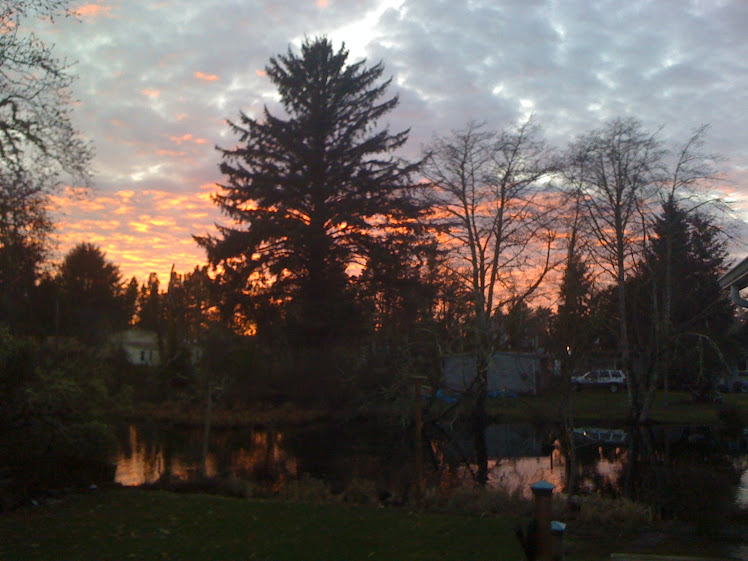
Winter Sunset, Loomis Outlet
Monday, July 8, 2013

Sunday, June 23, 2013
Las Mirismas Lake
Another early morning found us back in the boats, preparing
to travel the Upper Rio San Cristobal.
Our journey would take us to Las Mirismas, a huge, shallow lake favored
by both black-belled and fulvous whistling-ducks. As we started out from the dock in town, mist
rose off the water and we pulled on extra sweaters. Local men stood around, quietly eating
breakfasts purchased from the food cart that appeared at the dock every very early morning. Delicious smells of fresh tortillas and
unknown spices wafted over to us. The sky was a pure, clear pink with the
promise of another hot day, but just then it was downright chilly.
We drifted quietly
along the mangroves that form dense walls on each side of the river. Tiny, brilliant mangrove warblers (a
subspecies of yellow warbler, also seen) responded to a whistled owl call
courtesy of our guide. They hopped animatedly in circles, bright rust
heads and yellow breasts flashing in the early sun. A mangrove cuckoo prowled and hopped up the
branches; crane hawks and Harris’s hawks perched in high snags, watching for
breakfast in the still water below.
At Las Mirismas, purple gallinules stepped daintily in the
muck caused by cattle grazing down the shoreline. Rafts of both black-bellied and fulvous
whistling-ducks darkened the lake’s horizon. The black-bellied variety have charming hot
pink legs and feet. Barn swallows hunted
around us, sometimes coming within inches of us in order to snag a particularly
succulent bug.
By the time we left the lake it was hot, still and
buggy. Heat brings out the crocodiles
and we were on the watch. On the run
back downriver, we spotted a sunning croc that was at least 12 feet long. It showed us a very impressive row of uneven,
pointed teeth as we sped by.
Again, back to shade, a shower and a cold beer on the patio
to recount our morning’s adventures.
Saturday, June 8, 2013
La Noria Ranch, Nayarit
La Noria Ranch is located at the 5,000 foot level deep in the Sierra Madre range. The road to the ranch winds through five miles of wooded high elevation parkland called Cerro San Juan. Open, rolling land falls away as the road climbs higher to the cool forest above. At our first stop, still at a low elevation, a brown-backed solitaire's pure, trilling call welcomed the pristine morning. This is what might be called a drab bird, but once you hear his song, you will never think him ordinary. Unearthly bell-like notes fall and rise on the cool air as his breath becomes visible in the chill dawn air.
Tiny blue and red salvia blossoms along the roadside attract many hummingbirds. Some of the highlights were Mexican woodnymphs and the tiny bumblebee hummingbird. As we climbed higher, Sierra Madre pines became more abundant, and so did the woodpeckers. We encountered acorn, ladder-backed, and a Mexican endemic, gray-crowned woodpecker. A pair of stunning, aptly named green jays called and swooped across a wide canyon, giving us excellent looks.
At our coffee stop, we prowled the dense forest to find an abundance of warblers: red-faced, rufous-capped, crescent-chested. All as beautiful as their names.
A picnic lunch had been provided and we all found that for the first time, we actually needed another layer of clothing in Nayarit- it was cold in the mountains! We perched along a fence at La Noria Ranch and enjoyed the cool air and abundant birds.
We took a different route back to San Blas, arriving about 4:30 in the afternoon at a place called Mirador del Aquila, or View of the Eagles. In North America this would be called a scenic viewpoint. El Mirador is a pullout at the top of a steep hill on a busy highway. The forested hills fall away in the distance, soft blue and green in the haze, unspoiled as far as the eye can see. An hour before dusk, miliary macaws fly into the canyon far below to roost for the night. Seen from above, they are a gemlike turquoise-green. They call raucously and settle, fly, then resettle in the forest below.
Finally, when the light became too poor to pick up the lovely green macaws, we turned the van once again toward the welcoming lights of San Blas.
Tiny blue and red salvia blossoms along the roadside attract many hummingbirds. Some of the highlights were Mexican woodnymphs and the tiny bumblebee hummingbird. As we climbed higher, Sierra Madre pines became more abundant, and so did the woodpeckers. We encountered acorn, ladder-backed, and a Mexican endemic, gray-crowned woodpecker. A pair of stunning, aptly named green jays called and swooped across a wide canyon, giving us excellent looks.
At our coffee stop, we prowled the dense forest to find an abundance of warblers: red-faced, rufous-capped, crescent-chested. All as beautiful as their names.
A picnic lunch had been provided and we all found that for the first time, we actually needed another layer of clothing in Nayarit- it was cold in the mountains! We perched along a fence at La Noria Ranch and enjoyed the cool air and abundant birds.
We took a different route back to San Blas, arriving about 4:30 in the afternoon at a place called Mirador del Aquila, or View of the Eagles. In North America this would be called a scenic viewpoint. El Mirador is a pullout at the top of a steep hill on a busy highway. The forested hills fall away in the distance, soft blue and green in the haze, unspoiled as far as the eye can see. An hour before dusk, miliary macaws fly into the canyon far below to roost for the night. Seen from above, they are a gemlike turquoise-green. They call raucously and settle, fly, then resettle in the forest below.
Finally, when the light became too poor to pick up the lovely green macaws, we turned the van once again toward the welcoming lights of San Blas.
Friday, May 17, 2013
San Blas Day 3
The following day the afternoon sun was still high as we climbed into sturdy boats that took us up Canal La Tovara to a pristine spring located deep in the mangrove swamp.
Before heading upstream, we drifted to the sand flats near the river's mouth to find a rufous-necked wood-rail: a dark, beautiful skulking bird of the shadowy mangrove edges. In response to a taped call, he crept along the base of the mangroves, a magnificent blend of rufous browns and grays glowing in the late day sun.
As we passed through a big rough set of bird-filled rocks that span the river like teeth, neotropic cormorants and brown pelicans warily edged away. We drifted up the canal into the shady, cool tunnel through the mangroves. Boat-billed herons eyed us, almost close enough to touch. Bare-throated tiger-herons, as magical as their name, lurched away on enormous wings, squawking indignantly. A laughing falcon gave his eerie call from a tall ficus tree. Anhingas perched, wigs open, looking like black umbrellas set out to dry. The guide suddenly cut the engine and pointed to what looked like a hefty piece of gray driftwood protruding from the green mangroves. A northern potoo was perched with head extended and eyes closed at the end of the wood. Perfect in his protective coloration, he was motionless for ten minutes as we politely and quietly admired him from a few feet away. As dusk deepened, lesser nighthawks coursed along the water. We reached the spring in full darkness. We had seen many common pauraques and a lesser-bulldog fishing bat under a bright full moon. After a brief stretch and snack, we headed back. Powerful spotting lamps reflected the red eyes of 23 northern potoos, now alert, hunting from exposed perches along the riverbank. Tired and happy, we saw the lights of San Blas wink in the distance as we reentered the main river channel.
Before heading upstream, we drifted to the sand flats near the river's mouth to find a rufous-necked wood-rail: a dark, beautiful skulking bird of the shadowy mangrove edges. In response to a taped call, he crept along the base of the mangroves, a magnificent blend of rufous browns and grays glowing in the late day sun.
As we passed through a big rough set of bird-filled rocks that span the river like teeth, neotropic cormorants and brown pelicans warily edged away. We drifted up the canal into the shady, cool tunnel through the mangroves. Boat-billed herons eyed us, almost close enough to touch. Bare-throated tiger-herons, as magical as their name, lurched away on enormous wings, squawking indignantly. A laughing falcon gave his eerie call from a tall ficus tree. Anhingas perched, wigs open, looking like black umbrellas set out to dry. The guide suddenly cut the engine and pointed to what looked like a hefty piece of gray driftwood protruding from the green mangroves. A northern potoo was perched with head extended and eyes closed at the end of the wood. Perfect in his protective coloration, he was motionless for ten minutes as we politely and quietly admired him from a few feet away. As dusk deepened, lesser nighthawks coursed along the water. We reached the spring in full darkness. We had seen many common pauraques and a lesser-bulldog fishing bat under a bright full moon. After a brief stretch and snack, we headed back. Powerful spotting lamps reflected the red eyes of 23 northern potoos, now alert, hunting from exposed perches along the riverbank. Tired and happy, we saw the lights of San Blas wink in the distance as we reentered the main river channel.
Sunday, May 12, 2013
Day 2 in San Blas
The next morning we headed out of town before dawn. We drove through deserted streets where we passed sailors in crisp white uniforms pedaling ancient bicycles to the naval base at the harbor. We drove past deserted roadside stands that would later be fragrant with the smell of freshly baked pan de platanos, or banana bread, made with bananas from the nearby fields. Pink sunrise was mirrored in the lagoons just outside town.
Singayta is a small farming cooperative a short drive from San Blas. We turned our van onto the rough dirt track that intersects the orderly village. As we bumped slowly through a neighborhood of homes with walls woven of mangrove saplings, smiling children leaned through open doors. Pigs rooted behind fences next to fields of Brahman-mix cattle. A few chickens and dogs shared the road. Bougainvillea looped and draped everywhere, absorbing the dim early light. As we left the village behind, forest surrounded us. Our guide pulled to the side of the rutted road. The air was still cool and fresh as we climbed out of the van and began our walk.
Groove-billed ani's flitted and bobbed on the barbed-wire fence, and a pair of masked tityras landed high in a giant fig to catch the sun's first warmth. Squirrel cuckoos called and soon appeared over us; a pair hopped up the branches of a kapok tree just like squirrels. A big cleared meadow with a few banana trees yielded a small flock of brilliant stripe-headed sparrows and their drabber cousins, lark sparrows. Farther on, a well-hidden happy wren (its real name) enchanted us with its song. A lineated woodpecker flashed his bright head in the morning sun and a summer tanager completed the picture. There were many more birds that we happily added to our lists. At the far end of the road, a collared forest-falcon perched silently at the margin of the forest. The stock pond at the village had the only black phoebe we saw in the state of Nayarit.
As we birded the road, men carrying water bottles and machetes passed us quietly. Making their way to work by foot or bicycle, they greeted us with smiles and wishes for a good day.
Singayta is a small farming cooperative a short drive from San Blas. We turned our van onto the rough dirt track that intersects the orderly village. As we bumped slowly through a neighborhood of homes with walls woven of mangrove saplings, smiling children leaned through open doors. Pigs rooted behind fences next to fields of Brahman-mix cattle. A few chickens and dogs shared the road. Bougainvillea looped and draped everywhere, absorbing the dim early light. As we left the village behind, forest surrounded us. Our guide pulled to the side of the rutted road. The air was still cool and fresh as we climbed out of the van and began our walk.
Groove-billed ani's flitted and bobbed on the barbed-wire fence, and a pair of masked tityras landed high in a giant fig to catch the sun's first warmth. Squirrel cuckoos called and soon appeared over us; a pair hopped up the branches of a kapok tree just like squirrels. A big cleared meadow with a few banana trees yielded a small flock of brilliant stripe-headed sparrows and their drabber cousins, lark sparrows. Farther on, a well-hidden happy wren (its real name) enchanted us with its song. A lineated woodpecker flashed his bright head in the morning sun and a summer tanager completed the picture. There were many more birds that we happily added to our lists. At the far end of the road, a collared forest-falcon perched silently at the margin of the forest. The stock pond at the village had the only black phoebe we saw in the state of Nayarit.
As we birded the road, men carrying water bottles and machetes passed us quietly. Making their way to work by foot or bicycle, they greeted us with smiles and wishes for a good day.
Tuesday, May 7, 2013
San Blas, Mexico - Revisited
This article was originally published in Bird Watcher's Digest, Nov/Dec, 2000
The horizon was just turning a deep lapis blue as a young woman greeted us with a smile at the restaurant door. With a nod and a soft buenos dias she led us to our chairs, bearing a steaming pot of fresh, strong Mexican coffee. Another day of birding Mexico had begun. Although it was not yet 6:00 a.m., the comfortable El Delfin Restaurant, tucked into La Garza Canela Hotel, was bright with warm light and talk of the day's coming adventures. This particular day, two commercial birding tours and a few other small groups of people were making plans for a day of birding the wonderful areas around the town of San Blas, Nayarit, Mexico.
San Blas is a longtime favorite spot for birders. Over the past 15 years it has become better known and more accessible, due in part to excellent group tours to the area and a few comprehensive birding guides. San Blas is located approximately 80 miles north of Puerto Vallarta on the Pacific Ocean. The town is surrounded by mangrove swamps, shrimp ponds and lagoons. The Rio San Cristobal and its meandering tributaries flow through the outskirts. It is here that the magnificent Sierra Madre Occidental reaches the ocean. The climate is tropical. Relative isolation has kept San Blas a quiet and pleasant Mexican town, pretty much free of T-shirt shops and other noisy tourist attractions.
This past January I revisited San Blas and spent a week birding the lowlands, mangrove swamps, barranca and highlands that surround the town. Most areas are near enough to reach by early morning and bird until the heat of the day becomes intense. We would then return to the town for lunch and siesta or a swim, and go back out to bird from three in the afternoon until dark. Our group of eight logged 258 species last year. I picked up 19 additional life birds on this year's trip.
One of the most productive areas is just on the outskirts of town. Fort San Basilio is located at the top of a steep, rocky road that climbs through the dense forest surrounding town. The Fort dates back to the Spanish Colonial period and provides a sweeping view of the town and harbor. Now a quiet, graystone ruin, it's a perfect birding spot. The walk to the Fort ruins begins a few hundred feet below in a deserted plant nursery. Pink, white and magenta bougainvillea climb from tumbled pots to reach for the trees and banana plants that surround the clearing. The morning we visited, orange-fronted parakeets flew over in small, noisy flocks, along with white-fronted parrots and Mexican (blue-rumped) parrotlets- a Mexican endemic. Cinnamon hummingbirds buzzed in at the whistled imitation of a ferruginous pygmy-owl and black-chinned hummingbirds were easily found feeding in the bougainvillea. A citreoline trogon, another Mexican endemic, lemon breast rich in the sun, perched high in a gumbo-limbo tree. Deep in the shade nearby we found a russet-crowned motmot. Golden-cheeked woodpeckers and flycatchers were abundant ( we had seen willow, white-throated, vermilion, dusky-capped, brown-crested and social flycatchers by morning's end). A clay-colored robin (or thrush) hopped along the roadside, acting just like our less exotic American Robin.
When we reached the Fort, the town below us stretched to the sea. Mist shrouded the beach a few miles away, but a good scope brought in blue-footed boobies on the offshore rocks. Music and church bells drifted up to us. One of our group spotted a crane hawk with striking red eyes and feet, perched in the top of a palm below us. The hawk glared upward while hungrily dismembering a frog. We had a perfect view from above.
San Blas is surrounded by lowlands, and there are many lagoons and ponds a few minutes from town. Under the hot sun, these still, steamy ponds are rich areas for shorebirds during the winter months. We visited a few shrimp ponds and lagoons to find green and belted kingfishers, great egret, snowy egret, little blue heron, and many more. Common black hawk, Harris's hawk, gray hawk and short-tailed hawk soared the thermals above us. Chittering mangrove swallows lined the powerlines and below, least grebes shared the murky water with teal, shoveler and gadwall. Collared plovers searched the muck for shrimp.
From the ponds, it's a short drive to the ocean to cool off at Matanchen Bay, where white and brown pelicans, whimbrels and neotropical cormorants are plentiful. Magnificent frigatebirds roost in the palms around the small harbor. They look much less impressive folded up in a palm than soaring majestically above! The mouth of the Rio San Cristobal is a gentle, indirect flow to the ocean. Mangrove thickets define the river's edges. On the tide flats near the river mouth we found gull-billed terns, laughing gulls, Caspian, royal and Forster's terns and cocoa colored Wilson's plovers.
At this point we had had enough of the intense sun coupled with humidity in the ninety percent range. We headed back to our cool, tiled rooms for a very welcome shower and a cold beer on the stone patio. Hummingbirds whirred around us, sampling all the blooming tropical flowers.
Stay tuned for the next day's birding adventures.
The horizon was just turning a deep lapis blue as a young woman greeted us with a smile at the restaurant door. With a nod and a soft buenos dias she led us to our chairs, bearing a steaming pot of fresh, strong Mexican coffee. Another day of birding Mexico had begun. Although it was not yet 6:00 a.m., the comfortable El Delfin Restaurant, tucked into La Garza Canela Hotel, was bright with warm light and talk of the day's coming adventures. This particular day, two commercial birding tours and a few other small groups of people were making plans for a day of birding the wonderful areas around the town of San Blas, Nayarit, Mexico.
San Blas is a longtime favorite spot for birders. Over the past 15 years it has become better known and more accessible, due in part to excellent group tours to the area and a few comprehensive birding guides. San Blas is located approximately 80 miles north of Puerto Vallarta on the Pacific Ocean. The town is surrounded by mangrove swamps, shrimp ponds and lagoons. The Rio San Cristobal and its meandering tributaries flow through the outskirts. It is here that the magnificent Sierra Madre Occidental reaches the ocean. The climate is tropical. Relative isolation has kept San Blas a quiet and pleasant Mexican town, pretty much free of T-shirt shops and other noisy tourist attractions.
This past January I revisited San Blas and spent a week birding the lowlands, mangrove swamps, barranca and highlands that surround the town. Most areas are near enough to reach by early morning and bird until the heat of the day becomes intense. We would then return to the town for lunch and siesta or a swim, and go back out to bird from three in the afternoon until dark. Our group of eight logged 258 species last year. I picked up 19 additional life birds on this year's trip.
One of the most productive areas is just on the outskirts of town. Fort San Basilio is located at the top of a steep, rocky road that climbs through the dense forest surrounding town. The Fort dates back to the Spanish Colonial period and provides a sweeping view of the town and harbor. Now a quiet, graystone ruin, it's a perfect birding spot. The walk to the Fort ruins begins a few hundred feet below in a deserted plant nursery. Pink, white and magenta bougainvillea climb from tumbled pots to reach for the trees and banana plants that surround the clearing. The morning we visited, orange-fronted parakeets flew over in small, noisy flocks, along with white-fronted parrots and Mexican (blue-rumped) parrotlets- a Mexican endemic. Cinnamon hummingbirds buzzed in at the whistled imitation of a ferruginous pygmy-owl and black-chinned hummingbirds were easily found feeding in the bougainvillea. A citreoline trogon, another Mexican endemic, lemon breast rich in the sun, perched high in a gumbo-limbo tree. Deep in the shade nearby we found a russet-crowned motmot. Golden-cheeked woodpeckers and flycatchers were abundant ( we had seen willow, white-throated, vermilion, dusky-capped, brown-crested and social flycatchers by morning's end). A clay-colored robin (or thrush) hopped along the roadside, acting just like our less exotic American Robin.
When we reached the Fort, the town below us stretched to the sea. Mist shrouded the beach a few miles away, but a good scope brought in blue-footed boobies on the offshore rocks. Music and church bells drifted up to us. One of our group spotted a crane hawk with striking red eyes and feet, perched in the top of a palm below us. The hawk glared upward while hungrily dismembering a frog. We had a perfect view from above.
San Blas is surrounded by lowlands, and there are many lagoons and ponds a few minutes from town. Under the hot sun, these still, steamy ponds are rich areas for shorebirds during the winter months. We visited a few shrimp ponds and lagoons to find green and belted kingfishers, great egret, snowy egret, little blue heron, and many more. Common black hawk, Harris's hawk, gray hawk and short-tailed hawk soared the thermals above us. Chittering mangrove swallows lined the powerlines and below, least grebes shared the murky water with teal, shoveler and gadwall. Collared plovers searched the muck for shrimp.
From the ponds, it's a short drive to the ocean to cool off at Matanchen Bay, where white and brown pelicans, whimbrels and neotropical cormorants are plentiful. Magnificent frigatebirds roost in the palms around the small harbor. They look much less impressive folded up in a palm than soaring majestically above! The mouth of the Rio San Cristobal is a gentle, indirect flow to the ocean. Mangrove thickets define the river's edges. On the tide flats near the river mouth we found gull-billed terns, laughing gulls, Caspian, royal and Forster's terns and cocoa colored Wilson's plovers.
At this point we had had enough of the intense sun coupled with humidity in the ninety percent range. We headed back to our cool, tiled rooms for a very welcome shower and a cold beer on the stone patio. Hummingbirds whirred around us, sampling all the blooming tropical flowers.
Stay tuned for the next day's birding adventures.
Saturday, March 30, 2013
Signs of Spring
It's the last day of March and it feels like Spring is finally here. The duck crowd waiting for grub in the morning has dwindled to only four or five ducks. Out of this small crew, only one is a female. She is attended by a male mallard that stays close and warns off all the other males. I think this is the same couple that has spent summers with us for a few years. She does not brood eggs, but he is faithful, staying with her. I'll never know if they're really the same couple unless I band them, and it's OK, I'll just assume they are. He talks quietly to her as they pick through the wet morning grass for the corn bits I've tossed there.
All the while, the male Anna's hummingbirds are already up and going, proclaiming their territory. Shreep, shreep, shreep, it goes on from dawn till dusk. The males perch in the topmost branches of the escallonia tree, or near the top of the shore pine. Their heads turn rhythmically from side to side, side to side, watching for any small incursion into their territory. Alexander the Great could learn from these guys. They employ a scorched earth policy regarding any trespassing male hummingbird, be it an Anna's or a rufous.
The otters are making an occasional foray into the pond, coming down from the big lake. I saw one yesterday, crouching happily in the shallows and crunching some delectable little crustacean snagged from the cool water. They will be less enchanting when they return to hunt succulent baby ducks. It's Nature, after all.
Some very special ducks have graced us with a visit. Hooded mergansers are the soul of style. The male sports a lovely yellow eye and flashy colors of black, brown and brilliant white and a set of head feathers that he can raise into a quite flamboyant mohawk at a moment's notice. The hen is a quieter blend of browns and rufous reds. She too has a mohawk, but hers is more of a delicate reddish fan.
They have rounded heads and long thinnish bills. They love to dive, and it happens in the blink of an eye. The mohawk flattens, head arches gracefully down and the entire body forms a quick "C" before the bird disappears silently under the surface. He will reappear yards from where he dove, often with small fish crosswise in his bill.
One of the most charming things about common mergansers is their habit of allowing their youngsters to hitch a ride on their backs in the water. For the birds, it's simply a matter of safety and convenience, but for us humans, it's a major cuteness moment. Tiny, fuzzy brown babies sit happily, usually on the hen's back, and sometimes they will tuck themselves partially under her wing for warmth.
Mergansers are cavity nesters just like wood ducks. If you have wood duck boxes, you may be lucky enough to host a merganser family one year. Just as with wood ducks, as soon as the last duckling hatches, the hen leaves the box, heads for the closest water and begins to call to the ducklings. They find their way to the water and never look back.
It's evening, and the sky is pure, deep turquoise. The beaver is veeing slowly north to south, heading for lodgings in the wider, wilder part of the lake. The hummingbirds have gone to roost and the calling varied thrush is silent. The geese couple are roosting across the water on the neighbor's grass, and I can hear occasional quiet, hoarse 'chonks' from one of them.
Venus is shining in the sky and the tree frogs are tuning up. Who could want more?
All the while, the male Anna's hummingbirds are already up and going, proclaiming their territory. Shreep, shreep, shreep, it goes on from dawn till dusk. The males perch in the topmost branches of the escallonia tree, or near the top of the shore pine. Their heads turn rhythmically from side to side, side to side, watching for any small incursion into their territory. Alexander the Great could learn from these guys. They employ a scorched earth policy regarding any trespassing male hummingbird, be it an Anna's or a rufous.
The otters are making an occasional foray into the pond, coming down from the big lake. I saw one yesterday, crouching happily in the shallows and crunching some delectable little crustacean snagged from the cool water. They will be less enchanting when they return to hunt succulent baby ducks. It's Nature, after all.
Some very special ducks have graced us with a visit. Hooded mergansers are the soul of style. The male sports a lovely yellow eye and flashy colors of black, brown and brilliant white and a set of head feathers that he can raise into a quite flamboyant mohawk at a moment's notice. The hen is a quieter blend of browns and rufous reds. She too has a mohawk, but hers is more of a delicate reddish fan.
They have rounded heads and long thinnish bills. They love to dive, and it happens in the blink of an eye. The mohawk flattens, head arches gracefully down and the entire body forms a quick "C" before the bird disappears silently under the surface. He will reappear yards from where he dove, often with small fish crosswise in his bill.
One of the most charming things about common mergansers is their habit of allowing their youngsters to hitch a ride on their backs in the water. For the birds, it's simply a matter of safety and convenience, but for us humans, it's a major cuteness moment. Tiny, fuzzy brown babies sit happily, usually on the hen's back, and sometimes they will tuck themselves partially under her wing for warmth.
Mergansers are cavity nesters just like wood ducks. If you have wood duck boxes, you may be lucky enough to host a merganser family one year. Just as with wood ducks, as soon as the last duckling hatches, the hen leaves the box, heads for the closest water and begins to call to the ducklings. They find their way to the water and never look back.
It's evening, and the sky is pure, deep turquoise. The beaver is veeing slowly north to south, heading for lodgings in the wider, wilder part of the lake. The hummingbirds have gone to roost and the calling varied thrush is silent. The geese couple are roosting across the water on the neighbor's grass, and I can hear occasional quiet, hoarse 'chonks' from one of them.
Venus is shining in the sky and the tree frogs are tuning up. Who could want more?
Subscribe to:
Posts (Atom)